

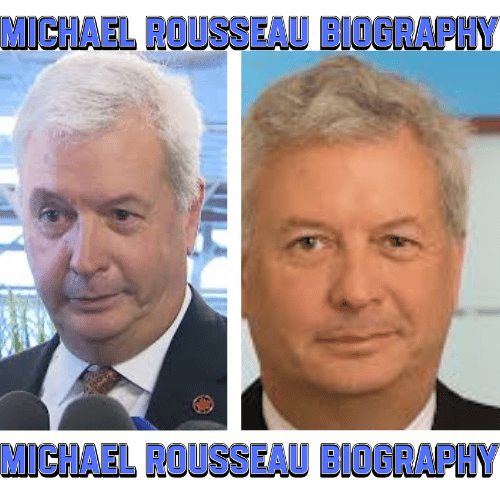
If you’ve followed Canadian business news at all in the last few years, you’ve almost certainly heard the name Michael Rousseau. He’s the man who turned Air Canada’s finances around, steered the airline through a global pandemic, and then — somewhat ironically — became the face of one of the country’s most heated cultural debates. His story is equal parts impressive and complicated, and it tells you a lot about what it means to lead a major national institution in a bilingual country.
This is the full Michael Rousseau biography — covering where he came from, how he built one of the most decorated careers in Canadian corporate history, what he accomplished at the helm of Air Canada, and how a language that he never quite learned became the defining issue of his tenure.
Who Is Michael Rousseau?
Quick Facts at a Glance
Michael Rousseau is a Canadian businessman and chartered accountant born in February 1958 in Cornwall, Ontario. He served as President and Chief Executive Officer of Air Canada from February 2021 until his announced retirement set for the end of Q3 2026. He joined Air Canada back in October 2007, initially as Executive Vice President and Chief Financial Officer, and spent nearly two decades helping shape the airline into one of North America’s most financially stable carriers.
In December 2024, he was also appointed Chair of the Star Alliance Chief Executive Board, representing 25 of the world’s largest airlines. He holds the Fellow Chartered Accountant (FCA) and Fellow Chartered Professional Accountant (FCPA) designations from CPA Ontario — two of the most prestigious credentials in Canadian accounting.
The Man Behind Canada’s Biggest Airline
Rousseau isn’t the flashiest executive you’ll ever read about. He doesn’t court celebrity status or dominate social media with personal posts. He’s fundamentally a numbers person — methodical, strategic, and deeply focused on balance sheets. That’s both what made him exceptional at his job and, in some ways, what left him exposed when cultural expectations demanded something different from a CEO.
His career before Air Canada already included running Canada’s largest retailer. When he arrived at the airline, he brought with him a sharp financial toolkit that would ultimately help rescue the company from its worst crisis in decades. But there’s more to his story than spreadsheets.
Early Life and Where He Grew Up
Cornwall, Ontario — A Small City with Big Ambitions
Michael Rousseau grew up in Cornwall, a small city tucked into the eastern corner of Ontario, right near the Quebec border and close to the United States. It’s a working-class city with a mix of English and French speakers — which makes the later controversy about his French language skills all the more ironic to many observers.
He was born in February 1958, making him 68 years old as of 2026. Not much else is publicly known about his childhood. He’s always been intensely private about his early years, and he’s never been the type to romanticize his origins in interviews. What’s clear is that from a young age, he gravitated toward numbers, finance, and business.
Family Background and Private Roots
Rousseau has kept his family almost entirely out of the public eye throughout his career. He’s known to reside in Montreal — a fact that became a major talking point given his inability to speak French — but his wife and any children are not subjects he’s ever publicly discussed in detail. That level of privacy is unusual for a CEO of his stature, but it’s also entirely consistent with how he’s chosen to operate: focused on work, quiet on everything else.
Education That Built a Financial Mind
York University’s Schulich School of Business
After graduating from high school in Cornwall, Rousseau made his way to Toronto to attend York University’s Schulich School of Business. He earned a Bachelor of Business Administration degree in 1981. Schulich is consistently ranked among Canada’s top business schools, and in the late 1970s and early 1980s, it was already producing graduates who were landing significant roles across the country’s corporate landscape.
His time there gave him a strong foundation in financial management, accounting principles, and corporate strategy. But what really set his trajectory was what came next.
Becoming a Chartered Accountant in 1983
After finishing his undergraduate degree, Rousseau pursued the Chartered Accountant designation — completing his articling period at Deloitte Haskins & Sells, the firm that would later become Deloitte Canada. He received his CA designation in 1983, joining the Ontario Institute of Chartered Accountants.
That credential opened doors in ways that his business degree alone couldn’t. The CA designation in Canada is rigorous and demanding, and it signaled to employers that Rousseau wasn’t just business-savvy — he had serious technical depth in financial reporting, auditing, and corporate governance.
FCA and FCPA Designations — What They Actually Mean
Years later, CPA Ontario conferred on Rousseau the Fellow Chartered Accountant (FCA) and Fellow Chartered Professional Accountant (FCPA) designations. These aren’t just longer versions of the same title — they’re awarded to accountants who have demonstrated exceptional achievement not only in their profession but also in community service and contributions to the field itself. It’s essentially the accounting world’s lifetime achievement recognition, and fewer than a small percentage of CAs ever receive it.
Michael Rousseau’s Career Before Air Canada
Starting Out at Deloitte and United Cigar Stores
His first real job after articling at Deloitte was an accounting manager role at United Cigar Stores in 1984. It wasn’t a glamorous start, but it was practical. He was learning how large retail operations managed their money, handled procurement, and structured their finance teams.
By his early 30s, Rousseau had already become CFO of United Cigar Stores — a rapid rise that signaled something important: he wasn’t just good at crunching numbers, he was good at running finance departments.
Silcorp Limited — A Hostile Takeover, a Friendly Exit
In 1993, Rousseau moved to Silcorp Limited as its Chief Financial Officer. This turned out to be one of the most formative chapters of his career, and one that barely gets mentioned in most biographies.
Silcorp owned the Mac’s Convenience Stores chain, and during his time there, Rousseau oversaw a significant financial restructuring of the business. More dramatically, between 1995 and 1996, he helped fend off a hostile takeover attempt by Alimentation Couche-Tard Inc. — one of the most aggressive retail acquirers in Canadian history. He successfully repelled that bid, only for negotiations to eventually result in a friendly acquisition in 1998.
That experience — managing a hostile bid, protecting shareholder interests, and steering a company through the high-stakes world of corporate acquisitions — gave Rousseau a skill set that most CFOs simply don’t have.
Moore Corporation in Chicago: Going International
After the Silcorp acquisition wrapped up, Rousseau was recruited by Moore Corp. Ltd. to serve as its CFO in Chicago, Illinois. This was a significant move — Moore was a major player in business forms and printing services, and it was an international operation. For Rousseau, it meant exposure to managing finances across multiple countries and currencies, and navigating a corporate environment that extended well beyond Canada.
His time in Chicago was relatively brief, but it rounded out his experience in a way that made him attractive to the next, much bigger opportunity waiting for him back home.
Hudson’s Bay Company: Running Canada’s Biggest Retailer
In 2001, Rousseau returned to Canada to join Hudson’s Bay Company as Executive Vice President and Chief Financial Officer. HBC was — and remains — an iconic Canadian institution. It’s the country’s oldest company and at the time was its largest diversified general merchandise retailer, running The Bay and Zellers.
By 2005, Rousseau had been elevated to President of the Hudson’s Bay Company. That meant he wasn’t just managing the finances — he was running the entire business. Under his leadership, HBC navigated some genuinely difficult years in the retail sector, and he managed the company’s financial strategies and investor relations during a period of significant change in Canadian retail.
He left HBC in 2007 to join Air Canada.
The Air Canada Years — A Nearly Two-Decade Journey
Joining Air Canada in 2007 as Executive VP and CFO
When Michael Rousseau walked into Air Canada on October 22, 2007, the airline was still carrying significant scars from its 2003 restructuring and bankruptcy protection period. The company had stabilized, but it hadn’t yet proven it could thrive in the long run. That’s the challenge Rousseau was brought in to address.
As Executive Vice President and Chief Financial Officer, his responsibilities were enormous. He oversaw every dimension of the airline’s financial life — investor relations, treasury, financial planning, pension administration, taxation, internal audit, procurement, and corporate real estate. It was a role that touched every part of the company, and he executed it with the kind of quiet precision that doesn’t generate headlines but does generate results.
How He Helped Fix Air Canada’s Balance Sheet and Pension Crisis
One of Rousseau’s most significant — and least appreciated — achievements is what he did to Air Canada’s pension plans. When he arrived, the airline was carrying a substantial pension deficit, which is essentially a liability sitting on the company’s books that threatens long-term financial stability. Over his tenure, he worked systematically to address that deficit, and by the time of his retirement announcement, the airline’s pension plans had been restored to solvency — turning a major liability into a genuine surplus.
He also dramatically improved the airline’s balance sheet more broadly, boosting its credit profile and reducing debt in ways that made the company far more attractive to investors. Between 2007 and 2020, he was credited by the Canadian Press with playing a central role in transforming Air Canada’s financial trajectory.
Canada’s CFO of the Year 2017 — What He Did to Earn It
In 2017, Financial Executives International Canada, PwC Canada, and Robert Half named Michael Rousseau Canada’s CFO of the Year. That’s not a marketing award — it’s recognition from the financial community itself that someone has done genuinely exceptional work managing a major organization’s finances.
By 2017, Air Canada had been generating record profitability. The airline was growing its international routes, its cost structure was more efficient than it had been in decades, and its pension situation was improving. Rousseau was the architect of much of that progress.
Becoming Deputy CEO in 2019 and Taking on Air Canada Rouge
In January 2019, Rousseau’s role was expanded beyond CFO. He was named Deputy Chief Executive Officer, taking on oversight of several significant corporate initiatives in addition to his financial duties. Among these was Air Canada Rouge — the airline’s low-cost leisure subsidiary, designed to compete on vacation routes where budget carriers tend to dominate.
Managing Rouge required not just financial oversight but strategic thinking about market positioning, route profitability, and competitive dynamics. It was Rousseau’s first real taste of running something that wasn’t purely a finance function.
Named President and CEO in February 2021
When Air Canada’s longtime CEO Călin Rovinescu announced his retirement, the board’s choice of successor was Michael Rousseau. He was formally appointed President and CEO in February 2021, inheriting the airline at one of the most difficult moments in aviation history — the airline industry was in the depths of its COVID-19 collapse, with travel restrictions gutting revenues globally.
Major Achievements as Air Canada CEO
Leading the Post-COVID Recovery
The scale of COVID-19’s impact on Air Canada is hard to overstate. The airline burned through cash at a frightening rate during 2020 and 2021 as borders closed and passengers stayed home. When Rousseau took over as CEO, his most urgent job was stabilizing the company’s finances, managing its liquidity, and positioning it for a recovery that wasn’t yet visible on the horizon.
He did it. Air Canada’s post-pandemic recovery was one of the more impressive turnarounds in North American aviation. By the time the airline reported its Q4 2025 results, Rousseau described record revenues and strong year-over-year earnings growth — a far cry from the emergency conditions that greeted him when he took the top job.
The Aeroplan Acquisition and Loyalty Program Transformation
One of the standout strategic moves during Rousseau’s tenure was the acquisition and integration of the Aeroplan loyalty program. Aeroplan had originally been separated from Air Canada during the airline’s restructuring years, and the two had an arms-length relationship for years. Rousseau’s team moved to bring Aeroplan back under the Air Canada umbrella, which fundamentally transformed how the airline built customer loyalty and generated ancillary revenue.
The integration boosted the airline’s relationship with its most frequent flyers and gave it a much more powerful platform for the kind of data-driven, loyalty-based marketing that modern airlines depend on. Air Canada’s board cited the Aeroplan acquisition as one of Rousseau’s defining achievements.
Restoring the Pension Fund from Deficit to Surplus
This is the achievement that doesn’t get enough attention in most Michael Rousseau biographies, and it deserves to. When he joined Air Canada in 2007, the pension plans were in deficit — meaning the airline owed more to current and future retirees than it had set aside to cover those obligations. Over nearly two decades, working across his roles as CFO, Deputy CEO, and CEO, Rousseau oversaw a systematic effort to address that deficit.
By the time of his retirement announcement in March 2026, the Air Canada board confirmed that the pension plans had been restored to solvency. For an airline that went through bankruptcy protection in 2003, that’s an extraordinary turnaround.
Appointed Chair of the Star Alliance Chief Executive Board (2024)
In December 2024, Rousseau was elected Chair of the Star Alliance Chief Executive Board. Star Alliance is the world’s largest airline alliance, bringing together 25 member carriers including Lufthansa, United Airlines, Singapore Airlines, and others. The Chair of the CEB is essentially the spokesperson and coordinating leader for all of those airlines’ CEOs on shared strategic issues.
It’s a role that carries significant global influence, and the fact that Rousseau was elected to it by his peers at the world’s biggest airlines says something about the professional respect he commanded internationally, even as he faced criticism domestically.
The French Language Controversy — Canada’s Biggest Corporate Debate
The 2021 Montreal Speech That Shocked the Nation
In November 2021, just months into his role as CEO, Michael Rousseau made his first major public speech — at the Chamber of Commerce of Metropolitan Montreal at the Palais des congrès. He spoke for 26 minutes. Of those 26 minutes, only about 20 seconds were in French.
When a journalist from the Quebec television channel LCN challenged him in French about this after the speech, asking how he’d managed to live in Montreal for 14 years without learning the language, Rousseau asked for the question to be repeated in English. He then replied that he had “been able to live in Montreal without speaking French” and added that this was “a testament to the city of Montreal.” As for why he hadn’t learned, he suggested that if people could see his work schedule, they’d understand.
Those two statements set off a national firestorm.
What Canada’s Official Languages Act Actually Requires
Here’s the legal context that most biography articles skip over. Air Canada is not just any private company — it’s a federally regulated corporation subject to Canada’s Official Languages Act. That legislation requires Air Canada to provide services in both English and French to Canadian travelers, and it establishes expectations for how the company communicates with the public and its employees.
As Canada’s Commissioner of Official Languages noted at the time, the CEO of a company subject to that Act should be able to communicate in both official languages. Rousseau’s inability to do so wasn’t just a cultural sensitivity issue — it had genuine regulatory and legal dimensions.
Politicians Who Criticized Him — From Trudeau to Legault
The backlash was swift and came from across the political spectrum. Then-Prime Minister Justin Trudeau criticized Rousseau directly, and deputy PM Chrystia Freeland sent a letter to Air Canada’s board insisting that Rousseau improve his French skills. Quebec Justice Minister Simon Jolin-Barrette described the situation as contempt for the French language. The Fédération des communautés francophones et acadienne du Canada called for an apology. The Montreal Chamber of Commerce expressed disappointment.
Even the NDP, the Coalition Avenir Québec, Québec Solidaire, and the Quebec Liberal Party all weighed in critically. It was the rare issue that managed to unite politicians who agreed on almost nothing else.
His Apologies and Pledges to Learn French
Rousseau did apologize. He released a statement acknowledging that he should have done more and pledging to commit himself to learning French. He reportedly took language lessons over the years that followed. But by his own admission in March 2026, despite years of lessons, he was still unable to adequately express himself in French.
That gap between the promise and the reality would prove to be his undoing.
The Air Canada Express Flight 8646 Crash and the Final Breaking Point
What Happened at LaGuardia Airport in March 2026
On March 22, 2026, an Air Canada Express CRJ-900 regional jet — operated by Jazz Aviation — collided with a fire truck while landing at New York’s LaGuardia Airport. The collision killed both pilots: First Officer Mackenzie Gunther and Captain Antoine Forest. Dozens of others were injured. It was a tragedy that sent shockwaves through the Canadian aviation community and beyond.
Captain Antoine Forest was a francophone from Coteau-du-Lac, Quebec. That detail would become deeply significant in the days that followed.
The English-Only Condolence Video and 2,360 Complaints
The day after the crash, Rousseau released a video statement on behalf of Air Canada expressing condolences. The video was four minutes long. It was delivered almost entirely in English. He said “bonjour” at the start and “merci” at the end — those were the only two words of French in the entire message. The rest was in English with French subtitles.
Given that one of the victims was a French-speaking Quebecer, that Air Canada is headquartered in Montreal, and that Rousseau had already promised five years earlier to learn French, the response was intense. The Commissioner of Official Languages received 2,360 complaints. Rousseau was summoned to appear before Parliament’s Official Languages Committee.
Prime Minister Carney, Quebec Premier Legault, and the Call to Resign
Prime Minister Mark Carney said the message showed “a lack of judgment” and “compassion.” Quebec Premier François Legault called for Rousseau’s resignation directly, and the Quebec National Assembly introduced a formal motion calling for the same. Bloc Québécois Leader Yves-François Blanchet described it as a demonstration of “a sad and gross lack of respect” for the Forest family.
Rousseau apologized again. He said he was “deeply saddened” that his “inability to speak French” had distracted from the grief of the mourning families. Many said the apology missed the point.
Michael Rousseau’s Retirement — The End of an Era
The March 30, 2026 Announcement
One week after the LaGuardia crash, on March 30, 2026, Air Canada’s Board of Directors announced that Michael Rousseau had informed the board he would retire by the end of the third quarter of 2026 — sometime in the fall. In an internal note to Air Canada employees, Rousseau said he was proud to have worn the airline’s emblem over his heart, but that the time had come for him to retire.
The airline’s board framed the retirement as the culmination of a long-running succession planning process that had been underway for more than two years — and while that may well be true, the timing left little ambiguity about what accelerated the announcement.
What Air Canada’s Board Said About His Legacy
Board Chair Vagn Sørensen was generous in his assessment. He praised what he called Rousseau’s “determined leadership,” specifically citing his navigation of both the 2007-2008 global financial crisis and the COVID-19 pandemic, the acquisition of Aeroplan, the restoration of the pension plans to solvency, and advances in customer experience and employee well-being. “His achievements include a legacy of financial strength,” Sørensen said.
That financial legacy is real. Whatever else is said about Rousseau, the numbers at Air Canada look dramatically different than they did when he arrived in 2007.
The Search for His Successor and What Comes Next
Air Canada retained two of the world’s leading executive search firms — Egon Zehnder and Korn Ferry — to identify the next CEO. The board has made clear that bilingual capability will be a core requirement. Quebec Premier Legault publicly stated that the next CEO should speak French as “a matter of respect for the employees, francophone customers, and all Quebecers.” That message has landed.
Michael Rousseau’s Net Worth and Salary
His Compensation Package — Salary, Bonuses, and Stock Awards
Michael Rousseau’s total compensation as Air Canada CEO sits at approximately CA$12 million per year when salary, stock awards, options, and bonuses are combined. The exact figure varies year to year based on performance metrics and the structure of equity awards.
The 2021 Controversy Over His $1 Million Pay vs. $12.38 Million in 2022
There’s an interesting wrinkle here. In 2021, the year he became CEO, Rousseau was paid approximately CA$1 million in total compensation. That low figure was a direct result of federal government restrictions on Air Canada executive pay, tied to the government’s financial support of the airline during the pandemic.
When those restrictions were lifted in 2022, his compensation jumped to CA$12.38 million — a figure that attracted its own controversy. Critics pointed out the sharp increase at a time when many Canadians were still feeling the economic effects of the pandemic. Supporters argued that his pay was in line with what a CEO of a major international carrier should earn, and that the 2021 figure was artificially suppressed by policy.
Personal Life — Family, Wife, and Private World
Michael Rousseau has made a deliberate choice to keep his personal life away from public view. He lives in Montreal, despite his well-documented inability to speak French fluently — a fact that has attracted endless commentary. He is believed to be married, but he has not made his spouse or family a subject of any public discussion. He doesn’t give personal interviews, doesn’t appear on social media for anything other than professional communications, and has generally preferred to let his work speak for itself.
In a media landscape where executives are increasingly expected to have a personal brand, Rousseau has been almost aggressively private. Whether that’s served him well is a complicated question — it may have contributed to the perception, during the language controversies, that he was out of touch with the communities his airline served.
Awards, Boards, and Professional Memberships
Beyond the Canada CFO of the Year award in 2017, Rousseau’s professional recognition includes his FCA and FCPA designations from CPA Ontario — rare honors given to those who have made outstanding contributions to the accounting profession.
He has served on the Board of Directors of Resolute Forest Products since 2010 and has held several other public company board memberships throughout his career. He is a member of the Board of Governors of the International Air Transport Association (IATA), the global body that represents the interests of the world’s airlines. And, until his retirement, he chaired the Star Alliance Chief Executive Board.
What Michael Rousseau’s Career Teaches Us About Corporate Leadership
There’s a lot to learn from Michael Rousseau’s career, and it’s not all cautionary tale. He’s genuinely one of the most accomplished financial executives Canada has produced in the last four decades. The turnaround he engineered at Air Canada — from a company that came out of bankruptcy protection in 2003 to one generating record revenues in 2025 — is a legitimate achievement that deserves recognition.
But his story also illustrates something important about what leadership in a national institution requires. Technical brilliance isn’t enough. The CEO of Air Canada isn’t just running an airline — they’re representing Canada, in a country with two official languages, to the world. The expectation that a leader in that role be able to communicate in both French and English isn’t a cultural nicety; it’s a legal requirement and a statement of respect for the people the institution serves.
Rousseau got the financial part right. He got the cultural and linguistic part consistently, persistently wrong. And in the end, it was the language — not the balance sheet — that defined how his tenure concluded.
It’s a lesson worth sitting with, especially for anyone who aspires to lead large, public-facing institutions: competence earns you the chair, but character determines how long you get to keep it.
Frequently Asked Questions About Michael Rousseau
Who is Michael Rousseau? Michael Rousseau is a Canadian businessman and chartered accountant who served as President and CEO of Air Canada from February 2021 until his retirement, announced in March 2026. He joined Air Canada in 2007 and spent nearly two decades at the airline in financial and executive leadership roles.
Does Michael Rousseau speak French? No. Despite living in Montreal for over 15 years and making repeated pledges to learn French, Rousseau has acknowledged that he cannot adequately express himself in French. This has been the most persistent controversy of his tenure as Air Canada CEO.
Why is Michael Rousseau retiring? Air Canada announced Rousseau’s retirement on March 30, 2026, framing it as the conclusion of a planned succession process. The announcement came one week after widespread criticism of his English-only condolence video following the fatal Air Canada Express Flight 8646 crash at LaGuardia Airport, which prompted calls for his resignation from Canada’s Prime Minister and Quebec’s Premier.
What is Michael Rousseau’s net worth and salary? His annual compensation as Air Canada CEO has been approximately CA$12 million, including salary, stock awards, options, and bonuses. In 2022, his total reported compensation was CA$12.38 million — a jump from approximately CA$1 million in 2021, when federal pandemic-related restrictions were in effect.
Where is Michael Rousseau from? He was born in February 1958 and grew up in Cornwall, Ontario — a small city in the eastern part of the province near the Quebec border.
What did Michael Rousseau do before Air Canada? Before Air Canada, Rousseau was President of Hudson’s Bay Company, Canada’s largest diversified retailer. He also served as CFO at Moore Corporation in Chicago, Silcorp Limited, and United Cigar Stores, and began his career as an accountant at Deloitte Haskins & Sells.
What happened with Air Canada Flight 8646? On March 22, 2026, an Air Canada Express CRJ-900 operated by Jazz Aviation collided with a fire truck while landing at New York’s LaGuardia Airport, killing both pilots — Captain Antoine Forest (a French-speaking Quebecer) and First Officer Mackenzie Gunther. Rousseau’s subsequent English-only condolence video sparked over 2,360 official complaints and intensified calls for his resignation.
What is the Star Alliance and what was Rousseau’s role? Star Alliance is the world’s largest airline alliance, comprising 25 member carriers including Lufthansa, United Airlines, and Singapore Airlines. In December 2024, Rousseau was elected Chair of the Star Alliance Chief Executive Board — a role that made him the coordinating leader among the CEOs of all 25 member airlines on shared strategic priorities.