

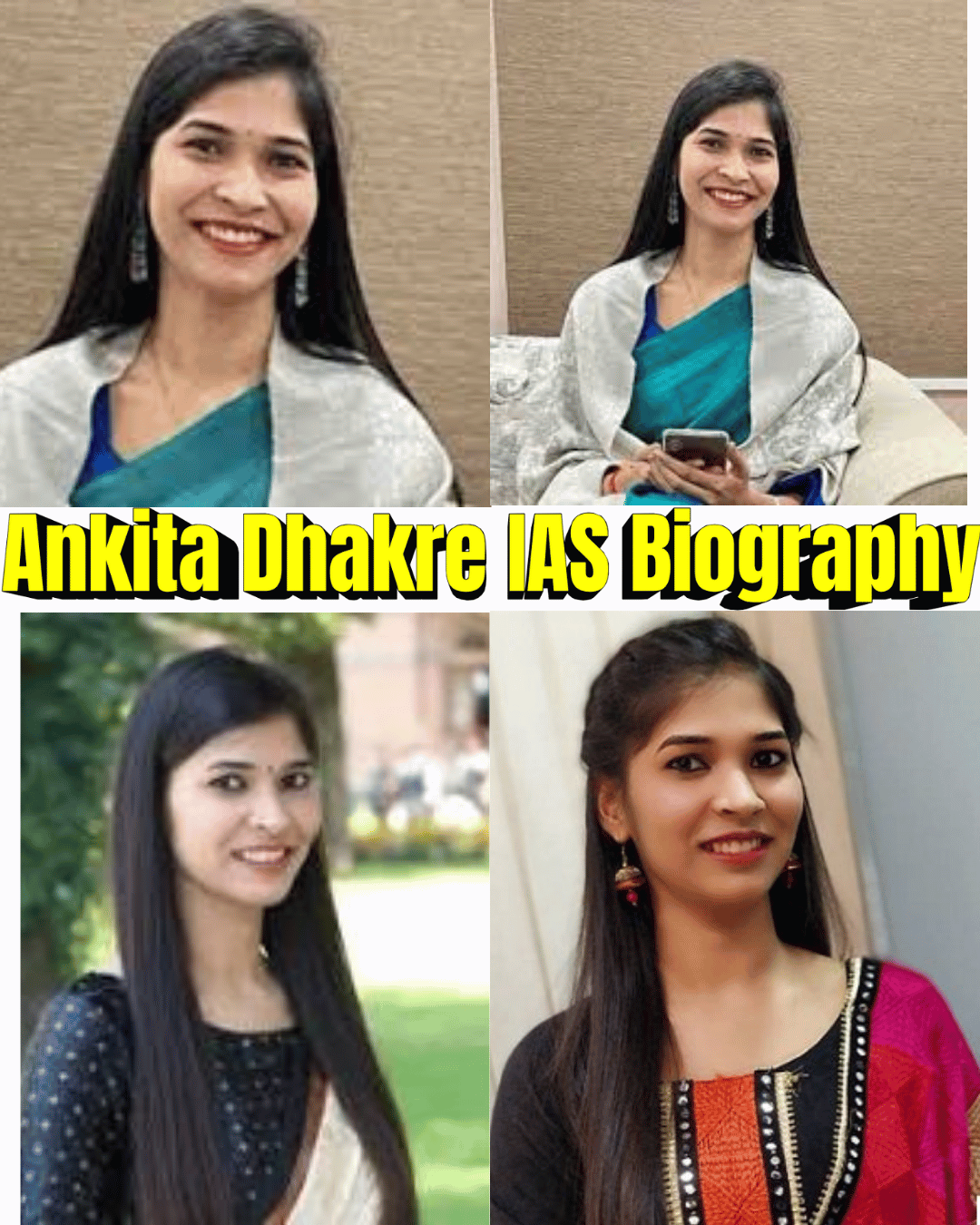
The Ankita Dhakre IAS biography reflects the journey of a determined and disciplined civil servant who cleared one of India’s toughest examinations—the UPSC Civil Services Examination. Ankita Dhakre IAS is known for her academic dedication, strong preparation strategy, and commitment to public service. Her story stands as a powerful example for aspirants who dream of joining the prestigious Indian Administrative Service.
Through resilience and focused preparation, she transformed her goal into reality, earning a respected place in India’s administrative framework.
Table of Contents
Ankita Dhakre IAS Biography
| Attribute | Details |
|---|---|
| Full Name | Ankita Dhakre |
| Profession | IAS Officer |
| Service | Indian Administrative Service |
| Known For | Clearing UPSC Civil Services Examination |
| Nationality | Indian |
| Education | Graduate (Discipline Not Publicly Confirmed) |
| UPSC Batch | Not Publicly Disclosed |
| Cadre | Not Publicly Confirmed |
| Training Academy | Lal Bahadur Shastri National Academy of Administration |
| Marital Status | Private |
| Current Role | Administrative Officer |
Early Life and Background
Ankita Dhakre was born and raised in India in a family that valued education and discipline. From a young age, she demonstrated academic excellence and a strong sense of responsibility.
Growing up, she likely witnessed the importance of governance and social development, which influenced her ambition to join civil services. Like many IAS aspirants, her journey required years of commitment and consistent effort.
Her early life shaped her resilience—an essential quality for clearing the UPSC examination.
Educational Journey
Education played a critical role in Ankita Dhakre’s success. She completed her schooling with strong academic performance and pursued higher education at a recognized institution in India.
Although her specific field of graduation is not widely documented, UPSC candidates typically come from diverse backgrounds such as:
- Engineering
- Humanities
- Commerce
- Science
- Law
Her academic discipline helped her build a strong foundation for the Civil Services Examination.
UPSC Preparation Strategy
Clearing the UPSC exam requires a strategic approach. Ankita Dhakre IAS likely followed a structured preparation plan that included:
- Studying NCERT books thoroughly
- Regular newspaper reading
- Answer-writing practice
- Mock tests and revisions
- Time management
The UPSC examination consists of three stages:
- Preliminary Examination
- Main Examination
- Personality Test (Interview)
Success demands intellectual depth, emotional balance, and consistent revision. Ankita’s achievement reflects dedication and smart planning.
Training at LBSNAA
After clearing the UPSC exam, selected candidates undergo training at the prestigious Lal Bahadur Shastri National Academy of Administration (LBSNAA) in Mussoorie.
During training, officers learn:
- Administrative procedures
- Leadership skills
- Public policy implementation
- Fieldwork and district training
This phase transforms candidates into capable administrators ready to handle real-world governance challenges.
Career in Indian Administrative Service
As an IAS officer, Ankita Dhakre serves in administrative roles that may include:
- Sub-Divisional Magistrate (SDM)
- District Magistrate (DM)
- Policy Implementation Officer
- Government Department Official
IAS officers play a key role in:
- Executing government schemes
- Managing district-level administration
- Ensuring law and order
- Supervising development programs
Her responsibilities contribute directly to public welfare and governance.
Responsibilities and Public Impact
An IAS officer’s role extends beyond office work. It involves direct engagement with the public.
Typical responsibilities include:
- Monitoring social welfare programs
- Addressing public grievances
- Disaster management coordination
- Infrastructure project supervision
Through her work, Ankita Dhakre IAS contributes to grassroots development and nation-building.
Leadership Style and Governance Approach
Effective IAS officers are known for:
- Ethical leadership
- Transparency
- Accountability
- People-first governance
Ankita Dhakre’s administrative style likely reflects discipline and compassion. Balancing authority with empathy is crucial in public administration.
Challenges in Civil Service
Civil service careers come with challenges such as:
- Frequent transfers
- Political and administrative pressures
- Public expectations
- Crisis management situations
Despite these challenges, IAS officers remain committed to service and development.
Ankita’s journey highlights perseverance and strength in overcoming obstacles.
Inspiration for UPSC Aspirants
The Ankita Dhakre IAS biography inspires thousands of aspirants preparing for UPSC.
Key lessons from her success include:
- Consistency over shortcuts
- Strong fundamentals
- Regular answer writing
- Mental resilience
Her story proves that success in UPSC is achievable through discipline and focus.
Conclusion
The Ankita Dhakre IAS biography represents a journey marked by dedication, strategic preparation, and commitment to public service. Becoming an IAS officer requires years of hard work, discipline, and mental strength.
Her story motivates aspiring civil servants to stay consistent and focused. Through her role in the Indian Administrative Service, Ankita Dhakre continues to contribute to governance and national development.
Her journey proves that determination, preparation, and perseverance can turn even the toughest dreams into reality.
Frequently Asked Questions (FAQs)
1. Who is Ankita Dhakre IAS?
Ankita Dhakre is an Indian Administrative Service officer who cleared the UPSC Civil Services Examination.
2. What is Ankita Dhakre known for?
She is known for successfully clearing one of India’s toughest competitive exams, UPSC.
3. Where did Ankita Dhakre receive training?
She received IAS training at the Lal Bahadur Shastri National Academy of Administration in Mussoorie.
4. What are the duties of an IAS officer?
Duties include implementing policies, managing districts, and ensuring effective governance.
5. Is Ankita Dhakre’s cadre publicly known?
Specific cadre details are not widely available.
6. Why is UPSC considered difficult?
UPSC is competitive due to its vast syllabus, multi-stage process, and limited selection ratio.